
“Light forces are experiencing a renaissance driven by changes to the strategic context and the evolving character of conflict. Nordic and Baltic allies demonstrate how light forces excel when integrated with organic fires and enablers, operating in dispersed formations and exploiting terrain complexity. Recent conflicts from Ukraine to Gaza reveal contemporary operating conditions – urban warfare, subterranean operations, a dispersed battlefield – that favour light forces as a solution.” – Major Laurence Thomson, the Chief of the General Staff’s Visiting Fellow at RUSI, argues that the 1st (United Kingdom) Division – the British Army’s light and airborne division – offers strategic choice, operational flexibility and capabilities essential for credible deterrence on NATO’s Eastern Flank Deterrence Line that must be prioritised, resourced and trained ready for war.
Read the digital document above, download a copy here or continuing reading below.
This CHACR Commentary explores the renaissance of light and airborne forces on the modern battlefield by considering the utility of the British Army’s 1st (United Kingdom) Division within the Allied Rapid Reaction Corps (ARRC), one of NATO’s two Strategic Reserve Corps (SRCs). To meet the Chief of the Defence Staff’s mission, the Division needs “to be ready to deter, fight and win today and tomorrow”, so it must capitalise on its unique characteristics and advantages – principally its ability to seize fast-mover advantage and be first to the fight.
Russia’s invasion of Ukraine heralded the advent of a new era in world geostrategic politics, described by Steve Covington as “an era of confrontation in which Russia and its allies will seek to dismantle the American-led security system”. In response, at the Madrid Summit NATO endorsed a new Strategic Concept and pledged to always defend every inch of NATO territory. Against such ambition, the SRCs have been allocated four key tasks: restore NATO’s territorial integrity; cause strategic dilemmas; mitigate risks; and create defensive strong points. 1st (United Kingdom) Division has an important role to play in the delivery of each one.
The Ukrainian conflict has demonstrated the continued utility of armour on the battlefield. However, ubiquitous lethality has levelled the playing field between light and airborne and armoured forces. All areas of the battlefield are vulnerable to persistent surveillance and precision strike. Dispersal and concealment arguably contribute more to survivability than thickness of armour. As such, 1st (United Kingdom) Division is fast being equipped with relatively inexpensive attritable and consumable capabilities that are accentuating its inherent strengths. The question becomes, in this period of renaissance, how to build a light and airborne Division to ensure it can deliver the strategic advantage, operational choice and tactical flexibility required? – Major General RSJ Hedderwick, GOC 1st (UK) Division.
INTRODUCTION
Recent conflicts have fundamentally changed the presumption of assumed superiority of heavy forces over light forces on the modern battlefield. Whilst both capabilities remain strategically vital in the context of NATO’s deterrence vis a vis Russia, light forces are having a contemporary renaissance. The Alliance is strengthening its deterrence posture along its Eastern Flank Deterrence Line and the British Army is optimising and modernising to meet its commitments to it.
The Strategic Defence Review 2025 states the “Army must modernise [its] two divisions and the corps HQ that it provides to NATO as one of the Alliance’s two SRCs” – Headquarters Allied Rapid Reaction Corps (HQ ARRC). It assumes both divisions are to be equally capable but nonetheless different; one is armoured, purposefully built for the Restore task, the other is to be light and airborne with speed, flexibility and strategic reach. This is the new purpose of the 1st (UK) Division and it has already begun to transform. Exercise Avenger Triad in November 2025 marked the first time 1st (UK) Division exercised in its new conventional warfighting role alongside 3rd (UK) Division under command of HQ ARRC. For the 1st (UK) Division, it built on its successful validation and year as the Land Component Command for the Allied Reaction Force and marked the start of its journey to become the second warfighting division alongside 3 (UK) Division. This will include subordinate brigade validation and mission readiness exercises that will refine how the division mounts, deploys, survives, fights and wins on the battlefield. Force testing, experimentation and structural refinement will also occur to better align 1st (UK) Division with the broader Integrated Force. Ultimately, it will be tested and validated on Exercise Arrcade Storm in October 2026, whereupon it will assume readiness as part of the SRC.
1st (UK) Division’s purpose remains clear: to fight and win on the battlefield. However, the characteristics of its utility remain as yet undefined. This paper will address this through three fundamental questions. First, what can be learned from NATO’s northern flank allies, principally Denmark, Estonia and Finland? Second, what does recent history teach about light forces’ enduring utility? Third, under what operating conditions are light forces best suited? This Commentary argues that the 1st (UK) Division, as the light and airborne division, offers strategic choice, operational flexibility and capabilities essential for credible deterrence on NATO’s Eastern Flank Deterrence Line that must be prioritised, resourced and trained ready for war.
LEARNING FROM NATO’S NORTHERN FLANK
NATO’s northern flank offers lessons for light force employment. CHACR’s Might is Light research revealed four themes: light forces excel in complex terrain; they require integration with fires, enablers and intelligence, surveillance and reconnaissance capabilities; they must operate within combined arms and multi-domain plans; and success demands a distinct mindset.
Light forces must exploit complex terrain to avoid contesting an adversary’s mass or firepower advantages. Responding quickly in the event of crisis and with less force projection requirements mean light forces are able to deny an adversary’s freedom of manoeuvre by occupying terrain without necessarily having to fight for it. Finland exemplifies terrain-centric defence, using extensive forests, numerous lakes and urban areas for counter-mobility to channel and expose enemy columns – a template for how numerically inferior defenders impose disproportionate costs. Estonia’s Army prioritises survivability through concealment, dispersing forces and massing effects in mobile defence that combines difficult terrain with tactical mobility. Like in Scandinavia, the Baltics geography has dense forests, wetlands and concentrated population centres that favour the defender.
Distributed lethality compensates for light forces’ lack of armoured protection, low numbers and dispersal. Scandinavian and Baltic light forces equip precision weapons and fires capabilities to every company and battlegroup level, enabling units to survive and fight in geographic isolation. Small units occupy low-density positions with organic mortars and engineer capabilities, focusing on counter-mobility and survivability rather than confronting adversary mass. Finnish soldiers can call for indirect fires and lay mines, serving as both a ‘sensor’ and ‘effector’ within a layered and interconnected network. Such ‘effects complexes’ emerge when properly resourced and integrated with organic lethality, engineers, artillery and cross-domain capabilities across modern digital communications information networks.
However, light forces cannot survive in isolation and require integration within combined arms and multi-domain plans. Finnish light forces coordinate closely with engineers and artillery; Estonian doctrine emphasises integrated fire support; Denmark trains light forces alongside armour in Baltic exercises. Different force types offer comparative advantages when combined: light forces in complex terrain, airborne forces threatening flanks and changing battlefield geometry by rapidly deploying forces across the battlefield, heavy forces delivering mobile firepower and counter-attack options. NATO Northern Flank nations routinely exercise integration across domains through shared command and control systems, compatible procedures and realistic joint training.
Northern Flank light forces have cultivated a light forces mindset emphasising initiative, adaptability and endurance over conventional mass and firepower dominance. Complex terrain favours dispersion over concentration – mass precision fires punish concentration. Proficiency with low-cost, high-impact capabilities – anti-tank guided weapons, man-portable air defence systems and uncrewed aerial systems – must extend to the lowest tactical levels. Light forces are also easier and cheaper to modernise with novel sensors and effectors. Sustainment must be agile, with resilient soldiers capable of operating at the end of contested and constrained logistic lines. Exploiting civilian infrastructure where possible, as all three nations routinely exercise, rather than relying exclusively on military supply chains.
RECENT CONFLICTS AND THE RELATIVE RISE OF LIGHT FORCES
Today’s ongoing conflicts offer the most instructive lessons for understanding light forces’ contemporary utility and challenges in high-intensity warfare characterised by pervasive surveillance and mass precision fires.
The Second Nagorno-Karabakh War in September – November 2020 provided an early indication of how modern technology shifts the balance between heavy and light forces. Azerbaijani forces employed loitering munitions and armed drones to devastating effect against Armenian armoured formations, often catching them in open or poorly concealed positions. Even relatively unsophisticated uncrewed systems achieved high strike and kill rates against armoured vehicles when employed in sufficient numbers with good intelligence. Though Azerbaijan ultimately succeeded through combined arms operations integrating special forces, artillery and armour, concentrated armoured formations’ vulnerability to aerial surveillance and mass precision strike was stark. The lessons appeared clear: dispersion, concealment and mobility would matter more in future conflicts than armoured protection alone.
The ongoing Russo-Ukrainian War reinforces and expands these lessons, providing the most comprehensive evidence of light forces’ utility in near-peer conflict. The initial Russian invasion in February 2022 featured large-scale armoured manoeuvre that rapidly culminated in facing Ukrainian anti-tank defences and small-unit ambushes. Ukrainian territorial defence forces – essentially light infantry with anti-tank weapons – played crucial roles in blunting Russian advances around Kyiv, demonstrating how dispersed defenders with modern weapons impose prohibitive casualties on armoured columns in urban and forested terrain. The subsequent phase through 2023 saw conflict transition to static defensive lines reminiscent of the First World War, with both sides constructing extensive field fortifications and relying heavily on artillery. By 2024, the conflict evolved toward emphasising dispersed, small-unit infiltration operations which are still persistent today.
The Ukrainian Armed Forces’ Kursk offensive in August 2024 offers a glimpse into the offensive utility of light forces. Ukrainian forces used “small and manoeuvrable mobile groups” to breach Russian defences and advance up to 35 kilometres, penetrating deep behind the lines through speed and dispersion rather than armoured mass. These mobile groups combined light infantry with sufficient anti-tank and anti-aircraft capabilities to survive independently, exploiting gaps in Russian defences and bypassing strong-points rather than attempting to reduce them through direct assault. The operation achieved significant territorial gains and operational surprise precisely because Ukrainian light forces moved faster than Russian reserves could respond, and dispersed sufficiently to avoid becoming profitable targets for Russian artillery and aviation. By 2025, Russia had adjusted its approach, relying on small unit tactics to gradually erode the Ukrainian front line rather than using larger armoured formations that prove increasingly vulnerable to small drones and precision fires. Both sides have adopted ‘penny-packet’ tactics through dispersed detachments rather than concentrated formations in response to pervasive surveillance and precision strike capabilities that mean any significant concentration of forces attract immediate fires.
The Israel Defense Forces’ (IDF) operations in Gaza from October 2023 offer different but equally instructive case studies. In a dense urban environment, the IDF operated primarily as mechanised and light infantry conducting building clearances, with armour employed primarily in support rather than in leading roles. The subterranean battlefield proved particularly challenging, with Hamas’ extensive tunnel network requiring dedicated capabilities, specialist equipment and new tactical techniques. The IDF established subterranean coordination cells, employed shaft cameras and inertial navigation systems, and developed procedures for integrating above-ground and below-ground manoeuvre. Operations demonstrated both the essential requirement for light forces in urban warfare and challenges such as high casualties, difficulties in situational awareness, significant ammunition demand and requirement for intimate engineer support.
Light forces have proved their value when conflicts occur in complex terrain (including urban areas, mountains, forests etc) where armoured mobility becomes constrained. They provide essential capabilities for early entry operations where strategic deployment speed matters more than tactical firepower on arrival. Modern surveillance and precision fires increasingly favour dispersion over concentration, rewarding forces capable of operating in small, independent detachments rather than massed formations.
OPERATING CONDITIONS THAT BEST SUIT LIGHT FORCES
Contemporary operational environments present numerous conditions where light forces offer the most suitable and often the only viable solution to tactical and operational challenges.
Complex terrain – historically termed ‘rough’ terrain – remains the most obvious environment favouring light forces.1 Urban warfare is defined by “complexity” and has dominated recent conflicts from Fallujah to Mariupol, demonstrating that cities nullify many heavy armoured force advantages whilst rewarding infantry-centric combined arms teams. Within which subterranean warfare has emerged as a critical dimension, with Gaza operations highlighting requirements for dedicated capabilities, specialist equipment and coordination cells capable of integrating above-ground and below-ground manoeuvre. Equally, mountains present enduring challenges from altitude, weather and limited trafficability which preclude the use of heavy forces whilst demanding high individual fitness and small-unit initiative. Northern Europe’s extensive forests and numerous water obstacles similarly favour dispersion and concealment over armoured mass.
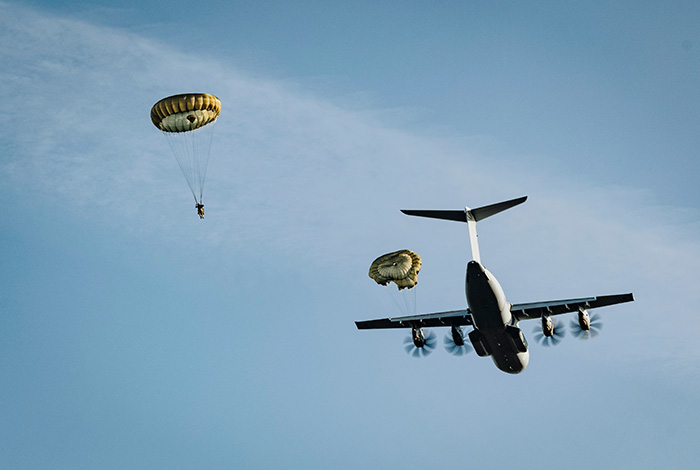
Air manoeuvre operations represent an obvious derivative context in which light forces can be employed. Early strategic entry and operations to seize vital ground and key terrain require forces that can deploy rapidly by air before adversary consolidation, and be able to hold until reinforced. Any terrain feature, complex or otherwise, can be occupied by rapidly deployed light forces ahead of heavy forces to prevent adversary advantage and stymie their advance. ‘Vertical envelopment’ offers opportunities for operational surprise and achieving positional advantage that ground manoeuvre cannot match. 16 Air Assault Brigade Combat Team exemplifies this capability, providing highly trained small units that can rapidly react and be able to deploy with minimal warning as a crisis is developing.
Light mechanised capabilities also offer a context in which light forces could be employed on the modern battlefield. Using the advantages of protected mobility, and other wheeled vehicle variants, they can also gain early strategic entry and seize ground ahead of an advancing enemy, deploying by road, ship or rail under an adversary’s anti-access, area-denial systems which may prevent the use of aircraft. In addition, once they arrive, they retain enhanced tactical mobility, firepower and protection relative to dismounted light forces and have a smaller logistic footprint than heavier, slow forces. Whilst they would avoid engaging from their vehicles in a direct contact battle with enemy armour, they can move quickly to outflank and distract, which is pivotal during early phases of NATO’s response to an attack. 7 Light Mechanised Brigade is the British Army’s proponent of light mechanised capabilities and was recently held at readiness as the NATO Response Force.
The operational feasibility of NATO’s SRC concept depends upon light forces. Unlike forces aligned to specific Regional Plans, both SRCs possess freedom of action across NATO’s frontage and could be deployed where force gaps emerge (as plans meet reality) or anywhere the Supreme Allied Commander Europe (SACEUR) requires additional capability. As the National Security Strategy 2025 asserted, “given our competitors’ ability to deploy scale to achieve advantage, we will complement our sovereign capabilities by deploying asymmetric strategies to cultivate a specialised edge”. Forces capable of rapid strategic deployment – capable of moving quickly in days rather than requiring weeks and months – and able to generate combat power fast upon arrival provide such an asymmetric edge.
Modern battlefield characteristics increasingly favour dispersed operations over concentrated formations. Pervasive surveillance from satellites, reconnaissance drones and signals intelligence makes concentration dangerous, whilst precision fires from artillery to loitering munitions punish massed formations. Survivability for dismounted forces depends upon dispersal, concealment and obfuscation at echelon across domains. Layered fires complexes depend upon “the ability to pass data between reconnaissance assets and artillery command posts” which are expected to be “improved in the near future through automation and data networking”. Light forces achieve survivability through mobility and concealment rather than armoured protection, operating in ways that exploit rather than resist these technological realities. Organic lethality proliferation threats are increased by drones, loitering munitions and anti-tank guided weapons, meaning small units can operate independently with considerable combat power.
Specific niche missions further demonstrate light forces’ utility: flank counter-attacks, rear area security and counter-infiltration operations require forces capable of covering large areas with relatively limited density, responding rapidly to threats and operating across complex terrain. Furthermore, advancing technology increasingly means light forces have the capabilities to deliver against mission sets traditionally the remit of armoured forces. The enduring benefits of light forces remain their ability to “detect and attack threats with fewer personnel, be deployed faster and at less cost, and be sustained more economically than the heavy armoured forces”. Strategic deception operations can employ light forces to create false impressions of friendly force dispositions and intentions, exploiting their mobility to appear in unexpected locations.
CONCLUSION
The evidence, drawn not only from contemporary lessons in Ukraine, but also historical analysis, is compelling. Light and airborne forces still have a crucially important role to play. 1st (UK) Division’s utility is as a rapidly deployable warfighting formation within NATO, trained and equipped to move fast, survive and deliver lethal effects. Such attributes allow the 1st (UK) Division to contribute meaningfully to the core tasks of an SRC: to pose dilemmas, deny an adversary advantage in domain, geography or readiness (mitigate risks) and to reinforce national or Regional Plans (create defensive strong points) in keeping with SACEUR’s Theory of Victory.
But we should be clear, the thesis of this Commentary is not that light is better than armoured, simply different and suited to a different array of tasks. Indeed, the Security Defence Review recognised that light and heavy forces are complementary and each is essential to truly deliver deterrence by denial and punishment and to substantiate the Advance, Reaction and Response Force framework. 1 (UK) Division’s light forces require organic lethality at every echelon, seamlessly integrated with cross-domain fires and combined arms in the Integrated Joint Force, with sustainment systems as agile as the forces themselves. Through training it should also cultivate the mindsets that being effective light forces demand: initiative, resilience and endurance, and adaptability.
Light forces are experiencing a renaissance driven by changes to the strategic context and the evolving character of conflict. Nordic and Baltic allies demonstrate how light forces excel when integrated with organic fires and enablers, operating in dispersed formations and exploiting terrain complexity. Recent conflicts from Ukraine to Gaza reveal contemporary operating conditions – urban warfare, subterranean operations, a dispersed battlefield – that favour light forces as a solution.
In an era when pervasive surveillance and mass precision fires make concentration fraught with risk, when complex terrain dominates likely battlefields, and when operational tempo often determines strategic outcomes, light forces provide options that armoured formations alone cannot. Success requires ensuring these forces possess credible lethality and sustainability – not just speed. The renaissance of light forces is not a nostalgic return to past doctrine but clear-eyed recognition of future battlefield realities.